
Interpreter Shortage: California Tightens Rules
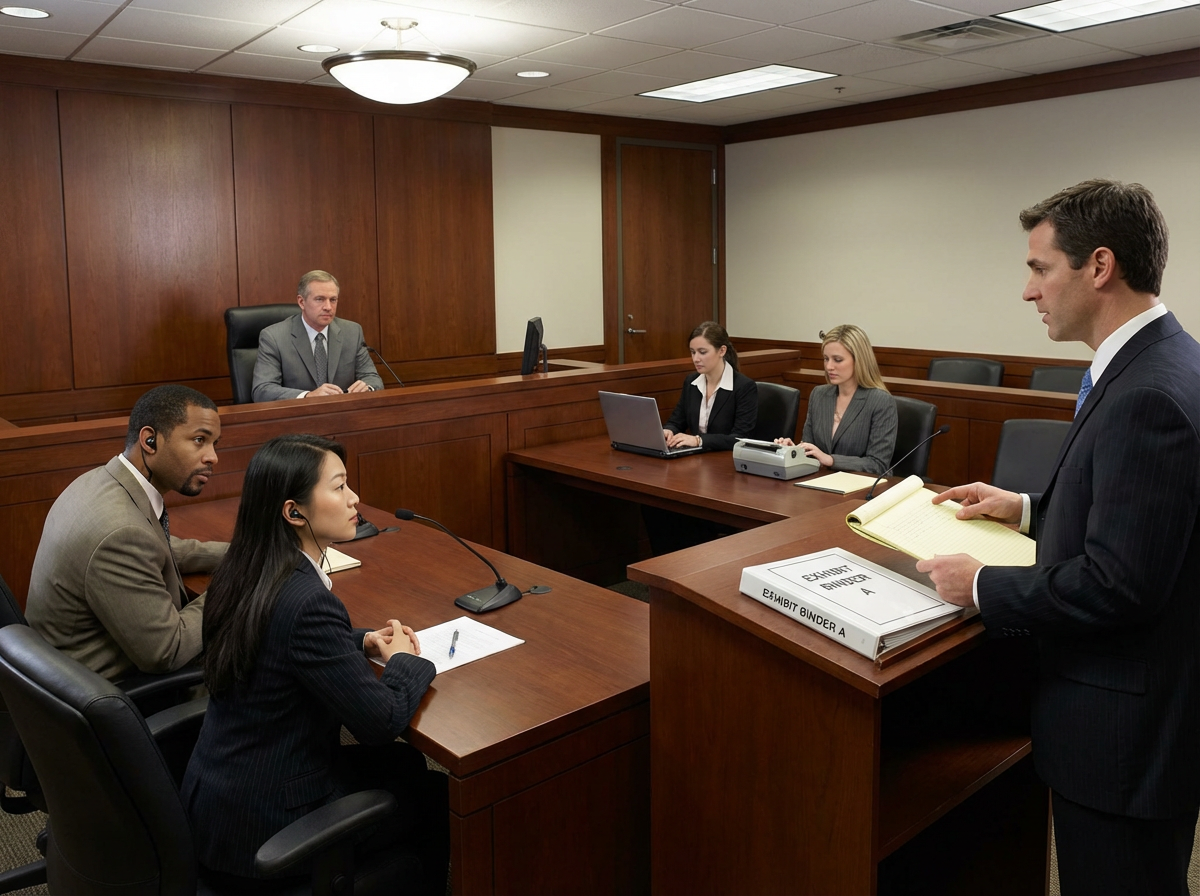
Imagine the supply chain for court interpreters as a funnel. At the top, the Court Interpreter Workforce Pilot Program was designed to pour in more certified professionals, with $6.8 million earmarked for training and exams. But demand has far outpaced the flow: Cohort 2 applications closed early due to overwhelming interest, and Cohort 3 won’t open until April 2026.
Meanwhile, at the narrow end of the funnel, the rules just got stricter. As of January 2025, certified and registered interpreters must verify compliance with continuing education, renewal fees, and proof of assignments under closer scrutiny. It’s less a gentle reminder, more a hard checkpoint.
The Gap Between Courtroom Needs and Interpreter Supply
The consequences aren’t abstract. When a hearing hinges on accurate testimony or a deposition transcript must withstand appeal, not having a credentialed interpreter ready can derail the entire case. Courts won’t accept “we couldn’t find someone on short notice” as an excuse.
And unlike AI language tools, which may help streamline drafts or automate routine translation, interpreters carry the responsibility of legal precision, cultural nuance, and professional ethics. Machines can guess at meaning; interpreters safeguard rights.
Practical Adjustments, Not Last-Minute Panic
This shortage is reshaping how attorneys, agencies, and courts must plan:
- Schedule interpreters early: Build interpreter booking into case prep as soon as a matter opens.
- Pre-verify credentials: Don’t assume availability equals compliance. Confirm certifications are up to date.
- Budget for scarcity: Interpreter time is now a premium; plan accordingly.
- Cultivate backups: Especially for less common languages, have a second interpreter vetted and on call.
- Monitor compliance shifts: With new rules, even long-trusted interpreters may face lapses without notice.
This isn’t just logistics, it’s safeguarding client outcomes.
Why This Matters
Behind every interpreter shortage statistic are people: defendants whose testimony must be heard, patients whose symptoms must be understood, families whose futures hinge on clarity. The rules may feel bureaucratic, but they are ultimately about protecting fairness, access, and dignity in California’s courts.
At Kaplan Interpreting Services, we see the shortage not as a dead-end but as a call to action. Our approach blends proactive scheduling, credential verification, and trust in human expertise. Because the risk isn’t just canceled hearings or messy transcripts, it’s the erosion of justice.
Interpreter availability may tighten, but preparedness doesn’t have to.

CEO & Founder
Born in Dallas, Texas, Alexandra grew up surrounded by Spanish, English, Arabic, and Italian. After moving to Venezuela, Spanish became her primary language. She holds a Master's in Healthcare Administration from Washington University in St. Louis and is a California court certified and medical interpreter.
She founded Kaplan Interpreting Services after seeing an industry that treated interpreters as interchangeable and clients as ticket numbers. She built a protocol-driven operation where every interpreter is hand-selected and credentialed for the specific setting, every client has a dedicated point of contact, and risk management is built into every assignment.
Her career reached a historic milestone when she interpreted the conversation between President-elect Biden and Pope Francis. That assignment, along with engagements for Nike and the Summit of the Americas, set the standard for every client engagement that followed.
"The same protocols that protected that historic conversation now protect every assignment we handle."