
Interpreter Shortages in U.S. Courts
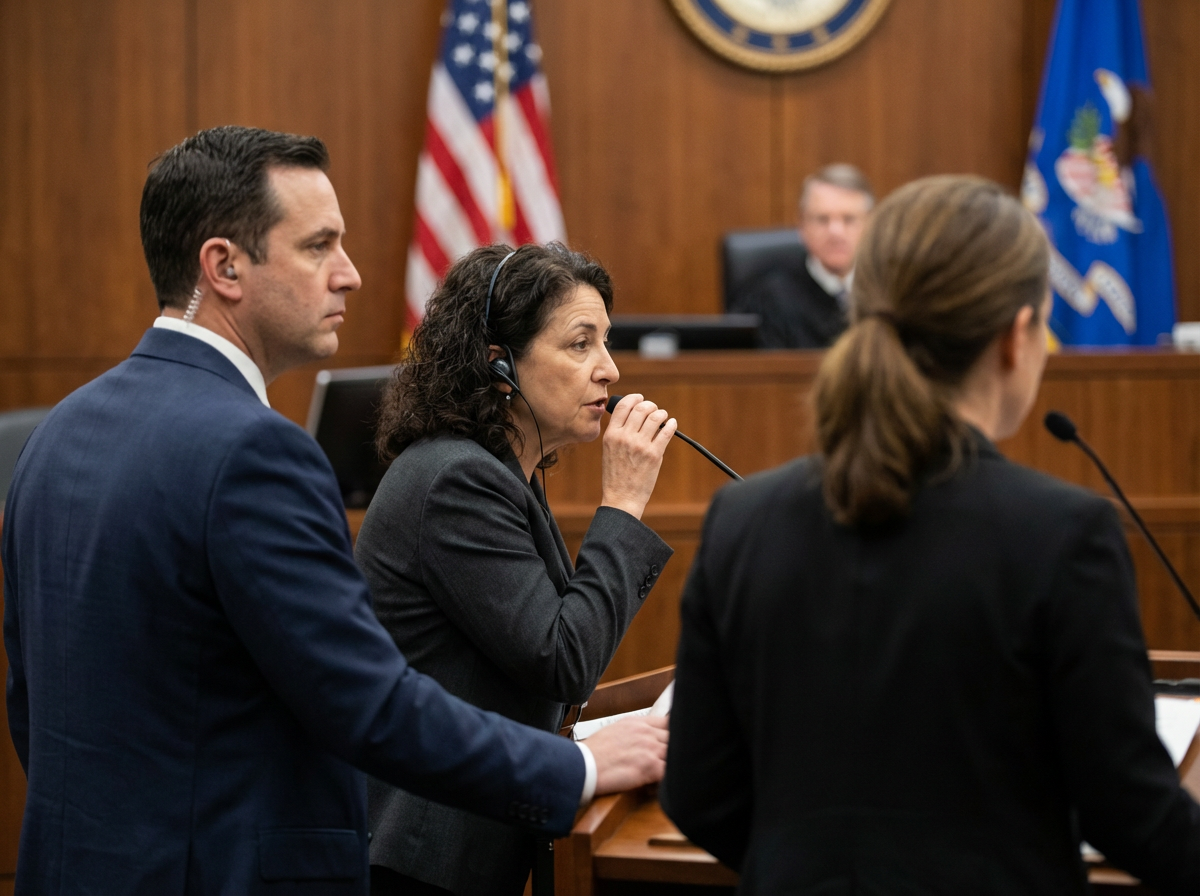
A recent 52-page report, Justice Disrupted, examines how state courts manage language access in courts and judicial interpreter programs. Its central finding is straightforward: in several states, the demand for certified court interpreters exceeds available supply.
The issue is not theoretical. It is structural.
When legal interpreting services are stretched thin, courts feel it in scheduling, staffing, and case flow. The report treats interpreter services as infrastructure. If that infrastructure is underbuilt, the system slows.
What the Report Identifies
Across jurisdictions studied, the authors found consistent patterns:
- An aging pool of court certified interpreters
- Limited recruitment pipelines for new certified interpreters
- Low certification exam pass rates
- Regional disparities in access to a qualified foreign language interpreter
- Growing reliance on virtual interpretation without uniform performance standards
The report does not allege misconduct. It identifies a numbers imbalance.
In multiple states, the pool of certified interpreters is smaller than the volume of proceedings requiring legal interpretation. The result is predictable: rescheduled hearings, calendar congestion, and heavier workloads for a limited group of professional interpreters.
When demand exceeds supply, delays follow.
Interpreter Services as Court Infrastructure
Court interpreter services are part of how proceedings function.
If a defendant requires legal interpretation, or a witness needs a deposition interpreter, a qualified professional must be available. If not, hearings move, calendars tighten, and attorneys lose meaningful preparation time with limited English proficient clients.
The report argues that legal interpreting services should be managed with the same discipline courts apply to judges, clerks, and courtroom space. That includes:
- Tracking interpreter demand by language
- Funding sufficient certified court interpreters
- Monitoring delays linked to interpreter availability
- Setting clear standards for virtual interpretation and in person interpretation
Interpreter services work best when they are forecasted and funded, not improvised.
Workforce Pipeline and Certification
Becoming a court certified interpreter requires advanced bilingual fluency, mastery of legal terminology, ethical training, and successful completion of rigorous examinations. These standards protect the integrity of legal interpretation.
The report notes:
- Recruitment efforts vary significantly by state
- Certification pass rates remain low
- Compensation does not always reflect the expertise required
- Veteran professional interpreters are retiring faster than new interpreters enter the field
If fewer certified interpreters enter the profession than leave it, shortages are not surprising. They are structural.
For interpreting companies in the USA and interpreting agencies in California that support courts and law firms, workforce sustainability directly affects reliability. Interpreter capacity is not a short-term scheduling issue. It is a long-term pipeline issue.
The Expansion of Virtual Interpretation
Virtual interpretation expanded rapidly during and after the pandemic. It now plays a central role in many judicial interpreter programs.
Remote platforms can increase coverage, particularly in rural regions or for lower-incidence languages. They are also used for simultaneous interpretation in larger proceedings.
But technology does not create certified interpreters.
The report cautions against assuming that virtual interpretation alone resolves interpreter shortages. Effective systems require:
- Clear performance standards for remote proceedings
- Reliable audio and video infrastructure
- Interpreter input in platform design and implementation
- Defined guidelines for when in person interpretation remains necessary
For providers of interpretation services and global translation services, hybrid models are now standard. Courts must ensure that quality control keeps pace with convenience.
What the Report Recommends
The authors outline practical reforms:
- Conduct statewide assessments of interpreter supply and projected demand.
- Strengthen recruitment and mentorship programs for certified interpreters.
- Review compensation structures to retain experienced professionals.
- Standardize data collection related to interpreter-related delays.
- Establish uniform standards for virtual and in person interpretation.
- Increase transparency in oversight of judicial interpreter programs.
These recommendations focus on planning and oversight. They do not require structural overhaul. They require attention and sustained investment.
Interpreter shortages are manageable when identified early and addressed deliberately.
Implications for Courts and Language Service Providers
For courts, the report reinforces the need for proactive management of language services and Title VI compliance obligations.
For law firms and agencies relying on legal translation, certified legal translation, document translation, and legal interpreting services, the findings underscore the importance of working with qualified providers rather than assuming availability.
Whether the need is a deposition interpreter, courtroom legal interpretation, or interpreter services for conference attendees in a court-sponsored program, qualified professionals must be secured in advance.
Interpretation services and translation services depend on structured intake, credential verification, and consistent oversight.
Kaplan’s Perspective as an Interpretation and Translation Agency
Kaplan Interpreting Services operates as a full-service interpretation and translation agency supporting courts, law firms, healthcare institutions, and government entities. The company provides court certified interpreters, professional interpreters for legal interpretation, simultaneous interpretation, legal translation, certified legal translation, and document translation in more than 200 languages .
Services include in person interpretation, virtual interpretation, deposition interpreter coverage, and interpreter services for conference attendees in legal and governmental settings .
A 98 percent same-day interpreter match rate and 99.7 percent on-time arrival reflect structured intake and credential verification . On-site and remote interpreting is available nationwide and internationally .
The broader takeaway from Justice Disrupted aligns with that model: interpretation and translation services require planning, standards, and sustained oversight.
Conclusion
Interpreter shortages in court systems develop gradually. They result from workforce, certification, and funding decisions that compound over time.
Justice Disrupted encourages states to evaluate judicial interpreter programs with data rather than assumption. Courts that regularly assess supply, strengthen recruitment pipelines, and maintain performance standards are better positioned to deliver consistent legal interpreting services.
Language access in courts is an administrative responsibility. The tools to strengthen it already exist. The report suggests using them before scheduling strain becomes systemic.
Clarity in court is not automatic. It is organized.

CEO & Founder
Born in Dallas, Texas, Alexandra grew up surrounded by Spanish, English, Arabic, and Italian. After moving to Venezuela, Spanish became her primary language. She holds a Master's in Healthcare Administration from Washington University in St. Louis and is a California court certified and medical interpreter.
She founded Kaplan Interpreting Services after seeing an industry that treated interpreters as interchangeable and clients as ticket numbers. She built a protocol-driven operation where every interpreter is hand-selected and credentialed for the specific setting, every client has a dedicated point of contact, and risk management is built into every assignment.
Her career reached a historic milestone when she interpreted the conversation between President-elect Biden and Pope Francis. That assignment, along with engagements for Nike and the Summit of the Americas, set the standard for every client engagement that followed.
"The same protocols that protected that historic conversation now protect every assignment we handle."