
California's Court Interpreter Crisis
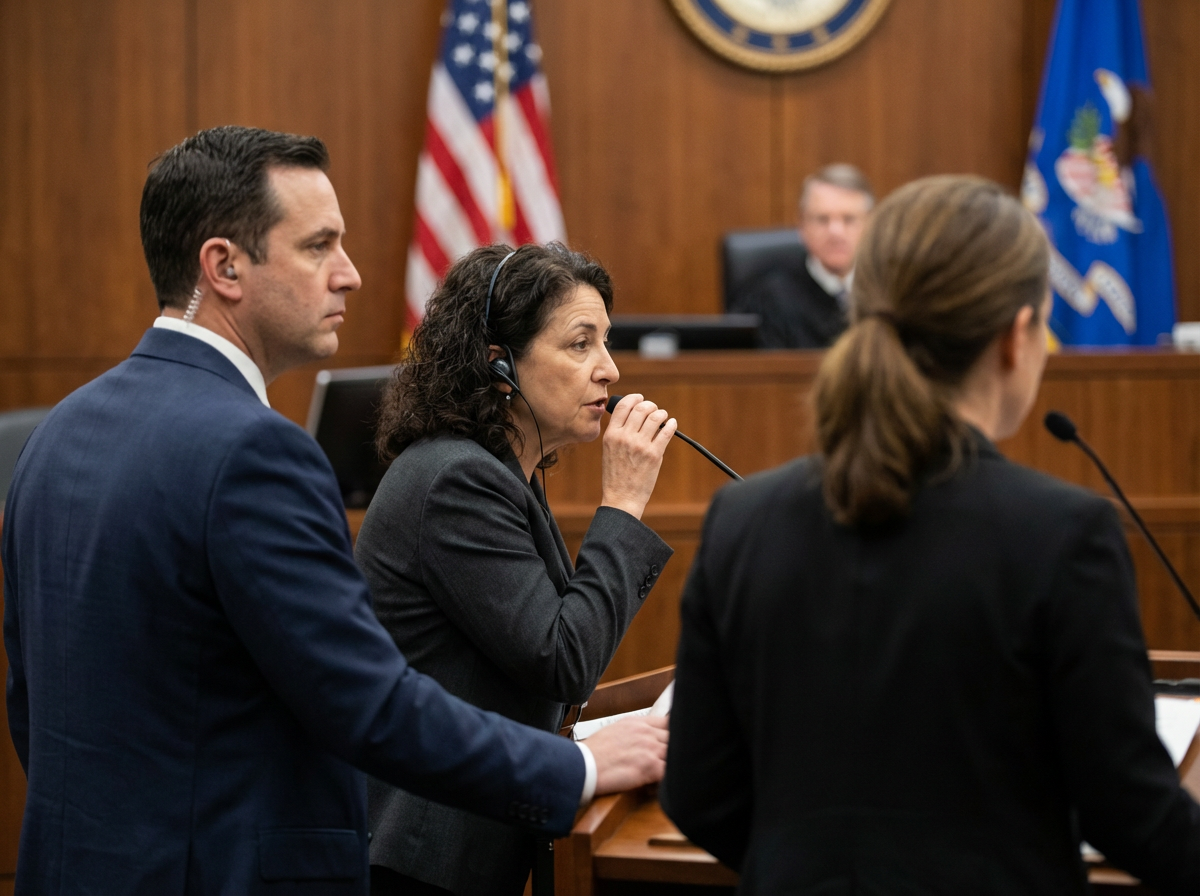
California has nearly 6.4 million residents who speak English less than “very well.” That is not a rounding error. It is roughly the population of Missouri walking into courthouses across the state every year, for arraignments, custody hearings, civil disputes, depositions, and facing a system that may or may not have a qualified interpreter available for them.
At its December 12 business meeting, the Judicial Council of California approved recommendations from a comprehensive court interpreter workforce study examining exactly this problem. The study is candid about the scale of the challenge and specific about what needs to change. For anyone working in legal interpreting services, professional translation, or court-adjacent fields, the findings deserve close attention.
What the Study Found
The picture that emerges from the Judicial Council’s study is one of uneven access, adequate in some corners, critically short in others.
Spanish is the most frequently interpreted language in California courts by a wide margin. In fiscal year 2023-24 alone, there were over 635,000 interpreted events in Spanish. The study found that Spanish interpreter needs are generally being met. But the study also found only 1,354 Spanish interpreters available statewide in 2024 to cover that volume, a number that underscores how thin the margin actually is, even in the state’s highest-demand language.
For other languages, the shortages are more acute. Mandarin, Vietnamese, and Punjabi follow Spanish in demand, but the interpreter pipeline for those languages is strained by a combination of factors: an aging and retiring interpreter workforce, difficulty passing the required court interpreter examinations, geographic concentration that leaves rural courts underserved, and competition from private industry, which increasingly offers better compensation for the same skills.
Interpreter spending has grown substantially from $95.9 million in fiscal year 2015-16 to $134.8 million in fiscal year 2024-25. In fiscal year 2023-24, expenditures actually exceeded the appropriation for the first time, a signal that demand has outrun the system’s capacity to respond.
What the Judicial Council Is Recommending
The study puts forward a set of concrete recommendations organized around access, training, compensation, and technology. Taken together, they represent the most comprehensive roadmap for California court interpreter services in years.
Reforming the certification pathway. The Bilingual Interpreting Examination, the gateway to becoming a certified court interpreter in California, has historically had low pass rates. The study recommends adopting carryover scoring, which would allow candidates who narrowly miss a passing score to carry that result forward for up to two years rather than starting over from scratch. It also recommends creating a multitiered credentialing system for Spanish, and eventually other languages, that lets candidates build skills progressively rather than facing an all-or-nothing exam. These changes matter because the current system inadvertently suppresses the pool of qualified professional interpreters at the exact moment demand is rising.
Building structured career pathways. The study calls for tiered systems and apprenticeship programs, particularly for Spanish interpreters. The California Court Interpreter Workforce Pilot Program, launched in May 2024, is already moving in this direction: it reimburses training and examination costs for selected candidates in exchange for a three-year commitment to work in the courts after certification. Over 1,000 candidates applied for the first cohort. Cohort 2 begins in January 2026. The demand to enter the profession is clearly there, the bottleneck is the pathway through it.
Expanding video remote interpreting. The study recommends building a statewide directory of court interpreters trained in video remote interpreting (VRI) and aggressively expanding its use, particularly in courts and counties with geographic constraints. Virtual interpretation is not a workaround, when executed by properly credentialed interpreters, it is a fully legitimate delivery method for legal interpreting services that can reach communities no in-person roster can cover consistently.
Expanding ASL and emerging language access. The study calls for continued growth in American Sign Language court interpreter access and for attention to emerging language needs. California recognized the Texas Board for Evaluation of Interpreters Court Interpreter Certification for ASL effective January 1, 2024, expanding the pool of credentialed ASL interpreters who can work in California courts. The study signals that more such expansions are coming.
Improving compensation. California’s court interpreter salaries are nationally competitive but still fall below federal levels. The study recommends that the Legislature, courts, and the Judicial Council review and improve compensation packages and develop mentorship programs to retain experienced court certified interpreters who might otherwise exit to better-paying opportunities in corporate or conference interpretation.
Why This Matters Beyond the Courthouse
The Judicial Council’s study is technically about the courts. But the dynamics it describes, a shrinking interpreter workforce, inadequate certification pipelines, underuse of remote technology, and compensation pressure from private industry, are not unique to the public sector.
Law firms relying on deposition interpreters, corporations conducting multilingual HR proceedings, and organizations needing simultaneous interpretation for high-stakes meetings all operate in the same interpreter market the courts are competing in. When the pipeline narrows, everyone feels it. And when organizations cut corners by hiring unverified, uncredentialed individuals for legal interpretation or document translation, the consequences are rarely visible until something goes wrong, a deposition that has to be retaken, a translated document that introduces a material error, a foreign language interpreter who cannot handle legal terminology under pressure.
The study makes clear that the solution is not simply more interpreters, it is more credentialed interpreters, better supported, better compensated, and better deployed. That is a standard worth holding across every context where language access matters.
At Kaplan Interpreting Services, we have spent 17 years building a bench of certified legal interpreters, court certified interpreters, and professional translators who meet exactly the standards the Judicial Council is trying to expand access to. Whether the assignment is in-person interpretation at a deposition, simultaneous interpretation at a corporate event, legal translation of case documents, or virtual interpretation via remote platforms, our interpreters arrive credentialed, prepared, and accountable.
California is finally building the infrastructure its 6.4 million LEP residents deserve. The rest of the work happens one qualified interpreter at a time.
Kaplan Interpreting Services is a WBE/MBE-certified interpretation and translation agency based in Southern California, serving Am Law 100 firms, Fortune 500 companies, and government agencies since 2007. Our services include in-person court interpretation, simultaneous conference interpretation, document translation, and remote virtual interpretation in dozens of languages.

CEO & Founder
Born in Dallas, Texas, Alexandra grew up surrounded by Spanish, English, Arabic, and Italian. After moving to Venezuela, Spanish became her primary language. She holds a Master's in Healthcare Administration from Washington University in St. Louis and is a California court certified and medical interpreter.
She founded Kaplan Interpreting Services after seeing an industry that treated interpreters as interchangeable and clients as ticket numbers. She built a protocol-driven operation where every interpreter is hand-selected and credentialed for the specific setting, every client has a dedicated point of contact, and risk management is built into every assignment.
Her career reached a historic milestone when she interpreted the conversation between President-elect Biden and Pope Francis. That assignment, along with engagements for Nike and the Summit of the Americas, set the standard for every client engagement that followed.
"The same protocols that protected that historic conversation now protect every assignment we handle."