
Why Courts Are Warning Against Using Google Translate for Legal Matters
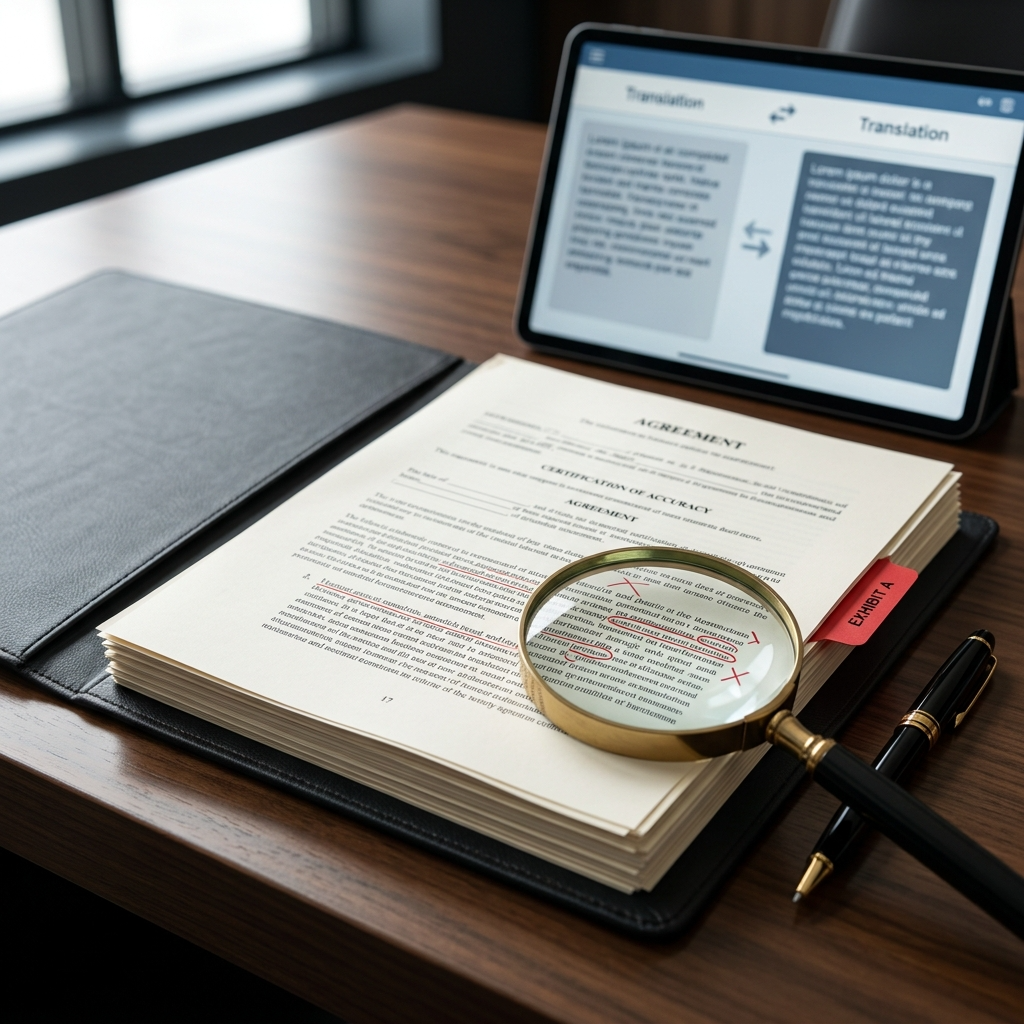
In 2025, the National Center for State Courts (NCSC) released a formal resource titled “Machine Translation: Considerations and Cautions for Courts.”
The message was direct:
Machine translation is not reliable enough to convey complex legal information, and courts should never use it for courtroom interactions or to communicate legal rights.
That is not a marketing opinion. That is guidance developed for courts operating under Title VI and constitutional due process obligations.
So what prompted that warning?
Machine Translation Is Based on Probability, Not Meaning
The NCSC cites guidance from the American Translators Association explaining that machine translation is based on probability, not understanding. These systems predict likely word combinations. They do not comprehend context, nuance, or legal consequence.
The report references research comparing human and AI translation of legal documents into Arabic. The findings showed that AI struggled with:
- Precise legal terminology
- Multi-clause legal sentences
- Clear rendering of legal responsibilities
- Avoiding ambiguity about consequences
In other words, the exact features that define legal communication.
Even a “High Accuracy Rate” Is Not High Enough in Law
The NCSC also cites a study evaluating Google Translate’s performance in medical discharge instructions. Spanish showed a 94% accuracy rate.
At first glance, that sounds acceptable.
But the report makes a critical point: Even a 6% inaccuracy rate can contain the most important sentence.
In a legal context, that six percent could include:
- A hearing date
- A compliance deadline
- A settlement term
- A condition precedent
- A waiver of rights
When legal rights depend on precise language, “mostly accurate” is not protective.
Federal Guidance Strongly Discourages Relying on Machine Translation Alone
The NCSC summarizes guidance from the U.S. Department of Justice:
Even when disclaimers are used, machine translation alone is discouraged. If an entity uses software-assisted translation, the DOJ recommends review by a qualified language professional.
Digital.gov similarly advises that automatic translation should only be used in very limited emergency situations to get the “gist,” and that original content must then be sent to a competent translator.
That is federal guidance, not private opinion.
Courts Must Provide Meaningful Access and Accuracy Matters
Under Title VI of the Civil Rights Act, courts must provide meaningful access to individuals with limited English proficiency. That includes providing information that is equivalent in accuracy to what English-speaking users receive.
The NCSC warns that widespread or unconsidered use of machine translation could:
- Violate civil rights obligations
- Undermine due process
- Expose courts to legal liability
- Damage public trust
If courts operating with constitutional mandates cannot rely on machine translation for legal communication, law firms should ask the same question.
The Practical Takeaway for Law Firms
Machine translation may be useful for:
- Draft internal content
- Getting a general sense of foreign-language text
- Preliminary, non-legal interactions
But when communicating:
- Legal rights
- Settlement terms
- Case strategy
- Procedural instructions
- Court dates
The standard must be higher.
A certified court interpreter or professional legal translator provides:
- Context awareness
- Terminology discipline
- Neutrality
- Confidentiality standards
- Accountability
Language is not an accessory to a case. It is part of the case.
If your firm wants language access structured in a way that protects your client and your reputation, let’s have a conversation.

CEO & Founder
Born in Dallas, Texas, Alexandra grew up surrounded by Spanish, English, Arabic, and Italian. After moving to Venezuela, Spanish became her primary language. She holds a Master's in Healthcare Administration from Washington University in St. Louis and is a California court certified and medical interpreter.
She founded Kaplan Interpreting Services after seeing an industry that treated interpreters as interchangeable and clients as ticket numbers. She built a protocol-driven operation where every interpreter is hand-selected and credentialed for the specific setting, every client has a dedicated point of contact, and risk management is built into every assignment.
Her career reached a historic milestone when she interpreted the conversation between President-elect Biden and Pope Francis. That assignment, along with engagements for Nike and the Summit of the Americas, set the standard for every client engagement that followed.
"The same protocols that protected that historic conversation now protect every assignment we handle."